
Six Days, No Oxygen, No Food: Sherpa Crawls Off Everest Alive While His Funeral Begins
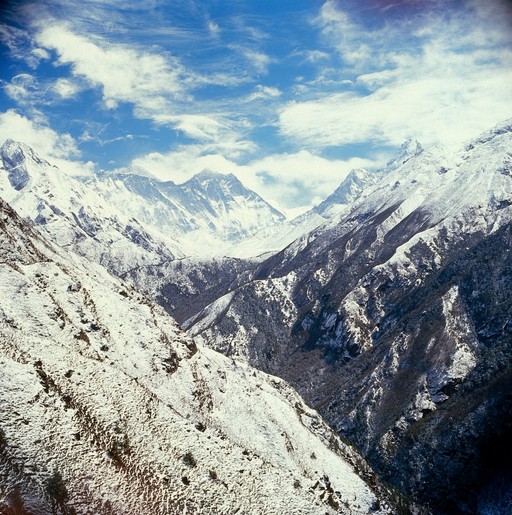
Above 7,500 meters on Mount Everest, the math of survival is brutally simple. At that altitude — known in mountaineering as the beginning of the Death Zone's extended killing range — oxygen saturation in the air runs roughly a third of what it is at sea level. Without supplemental oxygen, the human brain begins to deteriorate within minutes. Without food and water, the body follows within days. The window for surviving a solo, unplanned bivouac at that elevation, without gear, is measured not in days but in hours. Dawa Sherpa apparently did not get that memo.
The Nepali climbing guide disappeared on May 29 while working above Camp 3, supporting a Polish climbing team during the tail end of the 2025 Everest season. When he failed to return and search efforts in the immediate aftermath came up empty, the mountain's grim arithmetic took over. Rescue operations at extreme altitude are dangerous, expensive, and rarely successful after the first 24 hours. After six days with no contact and no sighting, the assumption hardened into near-certainty: Dawa Sherpa was dead on the mountain.
His family in Nepal began funeral rites — the rituals that mark the formal passage of a person from the living world, conducted even when, as is common on Everest, there is no body to return. This is not an unusual occurrence in the Sherpa community. The mountain has claimed hundreds of lives and returned few of them. The ceremonies are both religious obligation and psychological necessity for families left to grieve without closure.
Then, on June 4, a cleaning crew working the route toward base camp saw something that should not have been there: a man, moving. Not a body, not debris — a living person, crawling downward. It was Dawa Sherpa, descending under his own power after six days at extreme altitude with no supplemental oxygen and no documented food supply.
What exactly happened during those six days remains incompletely understood, and that is the honest answer — not a gap in reporting, but a genuine unknown. At altitudes above 7,000 meters, cognitive function degrades severely, memory formation is impaired, and survivors of extreme high-altitude ordeals frequently cannot reconstruct coherent timelines afterward. Whether Dawa found partial shelter, whether he located any residual supplies at one of the mountain's fixed camps, whether he moved continuously or remained stationary for extended periods — these are questions that may never have clean answers. What is not in question is the physical fact of his emergence.
The Sherpa guides who make Everest's commercial climbing industry function are the load-bearing structure of a multi-million-dollar operation that the global adventure tourism market prefers to frame as a story about individual summit dreams. Guides like Dawa carry equipment, fix ropes, ferry oxygen cylinders, and escort clients through terrain they know far better than the people paying five figures for the experience. They also die on the mountain at rates that rarely generate the sustained international attention that a Western climber's death would produce. The 2025 season has already recorded multiple fatalities, most of them among the Nepali workers who make the ascents possible.
Dawa Sherpa's survival does not change that structural reality, but it punctures, at least temporarily, the mountain's claim on him. The Himalayan climbing community, which operates in a tight network of guides, expedition operators, and rescue personnel headquartered largely in Kathmandu's Thamel district and in the Khumbu valley towns below Everest, received the news with what multiple accounts described as genuine disbelief. The word used repeatedly — by those at base camp, by those who know the altitude medicine — was "miracle," which in this context functions less as theology than as an admission that no existing physiological framework fully accounts for what occurred.
The Nepal Tourism Department, which regulates Everest expeditions and maintains official records of climbers on the mountain each season, had not released a formal statement detailing the circumstances of Dawa's disappearance or recovery as of the time of publication. The broader accountability question — what safety protocols govern guides working without clients above Camp 3, and what obligations expedition operators carry when a guide goes missing mid-season — remains largely unasked in the immediate wave of survival coverage. It deserves to be asked.
For now, the man himself is alive and descending toward lower altitude, where the air thickens and the body begins, slowly, to remember how to work again. His family stopped a funeral midway through. The mountain, which takes far more than it returns, gave one back.
Who is covering this (18+ outlets)
- kathmandupost.comLost on Everest for six days, Sherpa found alive
- The Times of IndiaSherpa survives 6-day Everest ordeal sans food, O2
- Greenfield Daily ReporterSherpa guide missing for a week on Mount Everest rescued while crawling to base camp
- Attack of the FanboyFuneral rites for a missing Sherpa guide begun at Mount Everest. Then he was spotted crawling back to base camp | Attack of the Fanboy
- News.azEverest guide found alive after six days missing on mountain | News.az
- WTX NewsDawa Sherpa found alive after six days on Mount Everest | WTX News
- GEO TVMissing Everest guide found alive after surviving a week without food or oxygen
- JezebelYou'll Never Be Half as Tough as the Sherpa Guide Who Spent a Week Crawling Down Everest
- BreitbartWATCH -- Sherpa Guide Who Disappeared on Mount Everest Survives for Days Without Extra Oxygen: 'A Miracle'
- Yahoo'Astonishing': Sherpa missing for 6 days on Mount Everest found alive
- ABC News'Astonishing': Sherpa missing for 6 days on Mount Everest found alive
- MirrorFamily were halfway through his funeral - but he crawled down Everest to safety
- Daily Gate CitySherpa guide missing on Everest for days rescued after crawling toward base camp
- BeritajaSherpa Guide Lost On Mount Everest Found Alive Crawling Back To Base Camp
- Global NewsSherpa guide lost on Mount Everest found alive crawling back to base camp
- KOAAEverest cleaning crew discovers crawling Sherpa in stunning survival story
- THE LOCAL REPORT ARTICLESSherpa survives 6-day ordeal on Mount Everest, climbs 12 kilometers from 25,000 feet without food or oxygen - THE LOCAL REPORT ARTICLES
- Outside OnlineHillary Dawa Sherpa Survived Six Days Alone on Mount Everest After Being Left on the Peak
See what people are saying about this story on X.