
Iran Strikes US Bases in Bahrain and Kuwait as Gulf War Spiral Accelerates
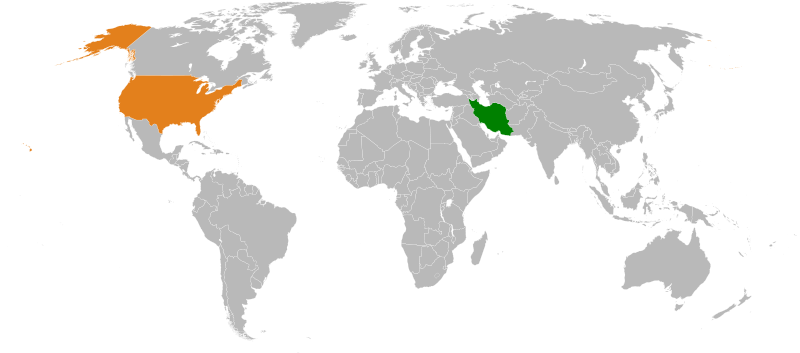
The fiction of a managed de-escalation died Wednesday when Iran's Islamic Revolutionary Guard Corps announced it had launched a combined missile and drone operation against US military infrastructure at two of America's most strategically sensitive Gulf addresses: the Fifth Fleet's home base at Bandar Salman in Bahrain and Ali Al Salem Air Base in Kuwait. The IRGC said it also claimed the shootdown of a US asset during the exchange. These are not symbolic targets. The Fifth Fleet commands US naval operations across roughly 2.5 million square miles of water, including the Strait of Hormuz — the same chokepoint whose tanker attacks triggered the US strike campaign that preceded all of this.
Washington's opening salvo had been anything but restrained. US forces struck more than 80 Iranian targets in a single wave — a scale of action that, even by the standards of post-2003 Middle East military history, represents an extraordinary commitment of force. The strikes were framed publicly as a response to attacks on commercial shipping in the Strait of Hormuz, a waterway through which roughly 20 percent of the world's traded oil passes. The IRGC did not deny responsibility for the tanker incidents. Neither did it blink.
Kuwait's government confirmed that hostile projectiles were intercepted over its territory and that defensive systems were activated. Official Kuwaiti statements were careful and clinical — the kind of language governments use when they want to acknowledge a reality without escalating it. Air raid sirens were reported activated across parts of Bahrain, with explosions audible in areas near the naval district. Whatever the outcome of those intercepts, the psychological effect on the 70,000-plus US military personnel stationed across Gulf Cooperation Council states is not a minor variable.
The architecture here matters and the press has done a poor job explaining it. Iran and the US had been operating under a fragile ceasefire understanding brokered through back-channel diplomatic pressure. Both sides knew it was thin. Tehran's calculus, visible in IRGC statements going back months, has been consistent: every US strike on Iranian soil or Iranian-linked forces is a threshold event that requires a visible response, or the deterrence posture collapses domestically. The IRGC does not answer to the foreign ministry. It answers to the Supreme Leader, and its institutional identity is built around the credibility of retaliation.
What the US strike architects apparently calculated — that hitting 80-plus targets would shock Iran into standing down — reflects either a fundamental misreading of that institution or a deliberate decision to end the ceasefire and accept the consequences. Neither explanation is comforting. The IRGC has spent four decades building redundant command structures, dispersed missile arsenals, and proxy networks precisely because it anticipated this kind of attrition campaign. Striking 80 targets is not the same as neutralizing the capability or the will.
The Gulf monarchies are now in an acutely uncomfortable position that their careful public statements cannot fully conceal. Bahrain and Kuwait host American forces by formal agreement and political necessity, but their populations, their trade relationships, and their geographic exposure to Iranian retaliation are all pointed in a different direction than Washington's current operational tempo. Kuwait's swift public confirmation of the intercept was partly defensive messaging — we handled it, we are not a battlefield — but the fact that Iranian ordnance was traveling toward Kuwaiti airspace at all is a line that was not crossed in previous rounds of US-Iran tension.
The Strait of Hormuz itself is the pressure point the world should be watching most closely. Iran has previously rehearsed, documented, and openly threatened the closure of the strait as an economic weapon. At roughly 21 miles wide at its narrowest navigable point, it is the kind of geography that rewards the side willing to make it unusable for everyone. Global oil markets registered the anxiety before most governments had finished drafting their statements.
What comes next depends on variables that no open-source analyst can fully map: the status of surviving Iranian missile batteries, the disposition of IRGC naval assets, and whether any back-channel communication between Washington and Tehran survived the last 72 hours. What can be said plainly is this — a ceasefire that both sides have now publicly violated is not a ceasefire. It is a pause between rounds. The Gulf has seen those before. They do not always end at a negotiating table.
Who is covering this (3+ outlets)
- S A N AKuwait Thwarts Hostile Missile and Drone Attacks
- Jordan News | Latest News from Jordan, MENANew Explosions and Air Raid Sirens Activated in Bahrain - Jordan News | Latest News from Jordan, MENA
- South China Morning PostUS strikes over 80 Iranian targets, after attacks on ships in Strait of Hormuz | South China Morning Post
See what people are saying about this story on X.