
IBM's 25% Collapse Is the AI Budget Reckoning Nobody Wanted to Name
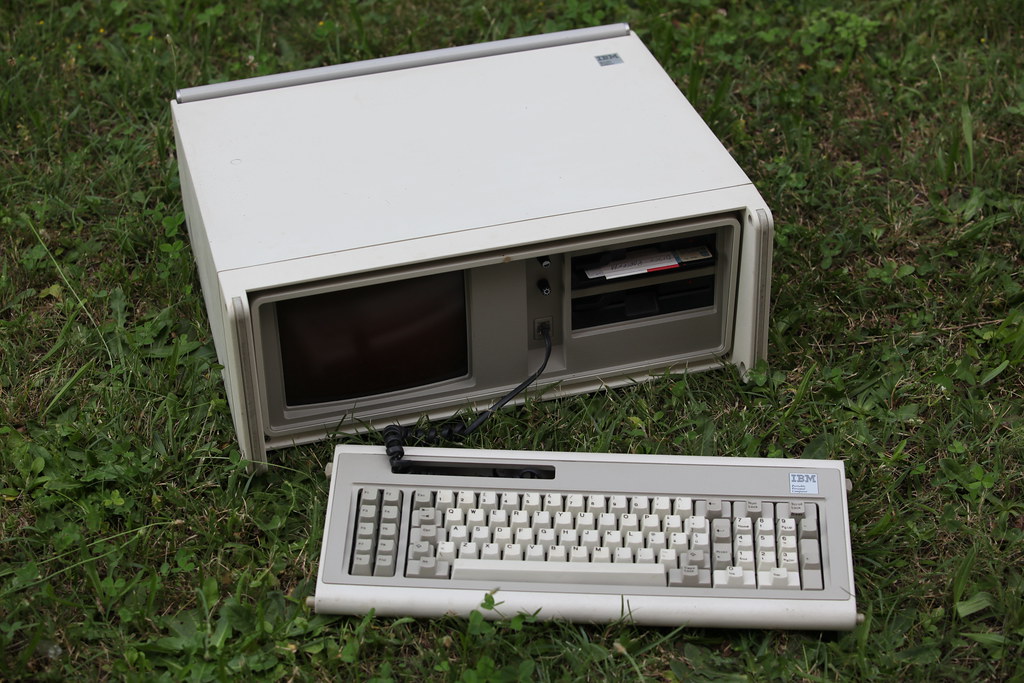
Tuesday was a day IBM's communications team will spend a long time trying to explain away. The company's stock shed roughly a quarter of its market value in a single session — its worst single-day decline in well over a century — after a preliminary earnings disclosure revealed that customers had front-loaded hardware purchases ahead of anticipated price increases, leaving a crater where recurring software revenue was supposed to be. The number wasn't a rounding error. It was a structural confession.
The mechanism here matters and the financial press has largely glossed over it. When enterprises accelerate hardware buys to get ahead of tariff-driven or supply-chain-driven price hikes, they aren't generating new demand — they're borrowing it from the future. The cash that went into IBM Power systems hardware in the most recent quarter is cash that won't be available for software renewals, cloud migrations, or AI tooling licenses for the next several quarters. IBM CEO Arvind Krishna acknowledged the dynamic directly, which was either admirably candid or an attempt to get ahead of a story that was going to land hard regardless.
What the collapse exposed isn't really an IBM story. IBM is the canary. The actual story is about where enterprise technology budgets are flowing, and the answer — increasingly obvious but still politically inconvenient for software vendors — is that the AI infrastructure build-out is a zero-sum competition for finite capital. Data centers, accelerator chips, power infrastructure, and high-bandwidth memory have first claim on that capital right now. Everything else is negotiating for what's left.
The damage spread with uncomfortable precision across the software sector. Atlassian, ServiceNow, and Adobe all fell meaningfully on a day when their own fundamentals hadn't changed. The market was repricing a thesis, not reacting to specific news from those companies. When enterprise buyers are stretching budgets toward hardware, collaboration tools and creative suites don't get the same urgency. The repricing was rational, even if it was brutal.
The memory angle is the thread that connects IBM's bad day to the broader semiconductor boom. Rising DRAM and HBM prices have been a significant tailwind for chip manufacturers for several quarters — memory that goes into AI accelerators and high-performance servers commands premium pricing, and those margins show up cleanly in chipmaker earnings. What IBM's preliminary disclosure surfaced is the demand-side of that equation: someone is paying elevated prices for that memory-intensive hardware, and it is enterprise IT departments, often under board-level pressure to show AI readiness. The money has to come from somewhere.
Cybersecurity was among the few software sub-sectors that held relatively better through the session — a detail worth noting. Security spending has a non-discretionary quality that most software categories lack; you can defer a ServiceNow expansion but you cannot easily defer a ransomware defense renewal without answering to regulators or insurers. That distinction is going to matter more as budget pressure intensifies. The technology sector is quietly bifurcating between infrastructure and security on one side, and discretionary productivity software on the other, and the AI build-out is accelerating that split.
Krishna's public accountability was notable. Rather than waiting for a formal earnings call to manage the disclosure in a controlled environment, IBM surfaced the preliminary numbers and the CEO went on record with a direct explanation. Whether that reflects genuine corporate transparency or a calculation that getting ahead of the leak was the least-bad option is a question the company's subsequent guidance will answer. What it did accomplish was keeping the narrative — barely — on IBM's terms rather than the market's.
The analyst community's reaction split predictably. Some called the mainframe weakness cyclical and pointed to IBM's AI software pipeline — including the Watson-successor tooling now being marketed under the watsonx umbrella — as a reason to see the decline as an overshoot. Others were blunter, noting that a company whose recovery thesis depends on enterprises spending more on software is going to struggle in exactly the environment IBM just described: one where enterprises are spending more on hardware. Both camps may be correct about different time horizons, which is precisely why the stock remains, in the words of at least one analyst, in the penalty box.
The deeper question IBM's Tuesday raises isn't about IBM at all. It is about the assumption baked into AI investment narratives for the past two years — the idea that infrastructure spending and software spending would rise together, a rising tide lifting all ships. What the budget data is beginning to show is that it was never a rising tide. It was a reallocation. And the bill, as IBM just demonstrated at considerable cost to its shareholders, is now coming due.
Who is covering this (18+ outlets)
- BlockonomiIBM (IBM) Stock Plunges 25% in Historic Single-Day Decline -- Should Investors Buy the Dip?
- CryptopolitanIBM stock crashes 25%, its worst day since 1987, on AI spending shift - Cryptopolitan
- HR ExecutiveWhat IBM's really bad day on Wall Street says about AI investment
- News.azIBM debuts AI-driven software for Power systems | News.az
- Yahoo! FinanceIBM stock price still in the 'penalty box' after epic 25% crash
- Barchart.comThe AI Gold Rush Has a Hidden Cost. IBM's Preliminary Results May Have Just Exposed It.
- DNyuzIBM's CEO just showed what taking accountability looks like
- StocktwitsIBM Stock Gains Premarket: Analyst Says AI Narrative Isn't Broken, Calls Mainframe Weakness A Short-Term Setback
- Bangla newsIBM Stock Crashes 25% on Earnings Miss, Worst Day in 112 Years
- CNBCIBM just had its worst day ever. Oppenheimer thinks investors should stay away from the stock
- Investing.comWhy Is IBM's Preliminary Report a Buy Signal for AI Beneficiaries?
- MarTech SeriesIBM Launches New Power Systems and Software Built for Enterprises to Address Risk, Productivity, and Flexibility
- International Business Times UKIBM Just Lost $68B in a Day: What Triggered Its Worst Stock Crash Since 1968
- IT News OnlineIBM Launches New Power Systems and Software Built for Enterprises to Address Risk, Productivity, and Flexibility
- The Manila timesIBM Launches New Power Systems and Software Built for Enterprises to Address Risk, Productivity, and Flexibility
- Investing News NetworkIBM Launches New Power Systems and Software Built for Enterprises to Address Risk, Productivity, and Flexibility
- La Voce di New YorkIBM Plunges on Wall Street in Worst Drop in Company History
- CNHI NewsIBM Launches New Power Systems and Software Built for Enterprises to Address Risk, Productivity, and Flexibility
See what people are saying about this story on X.