
Messi's Argentina Sink England Again — History Never Really Left the Pitch
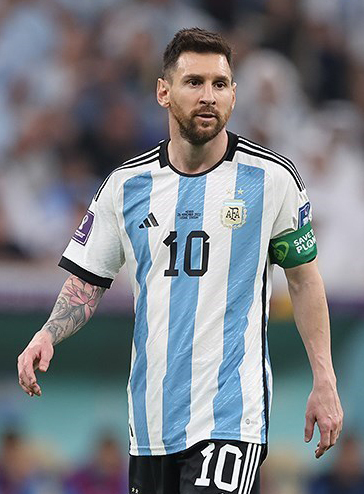
ATLANTA — When the final whistle blew at Mercedes-Benz Stadium and Argentina's players collapsed into one another in the kind of delirious, flag-waving heap that only a nation with this particular history can produce, Lionel Scaloni walked to the touchline and said, with careful deliberateness, that it had been nothing more than a football match. He was being diplomatic. He was also, by any honest measure, wrong.
Argentina 2, England 1. A deficit overturned. A semi-final settled in regulation, just barely, by a side that had looked, for long stretches of the second half, like it might actually be going home. And at the center of it all, inevitably, inescapably, Lionel Messi — who did not score, and who nonetheless rewrote the FIFA World Cup's all-time assist record in the process, threading two passes into positions England's defense had no answer for.
The bad blood between these two nations on a football pitch is not metaphor. It is documented, litigated, and remembered with a specificity that supporters on both sides pass down like inheritance. The 1986 quarter-final in Mexico City produced Diego Maradona's 'Hand of God' goal — a deliberate handball that referee Ali Bin Nasser did not call, followed minutes later by what FIFA would later vote the greatest goal in the tournament's history, both by the same man, in the same match, against the same opponent. Argentina won 2-1 that day too. The symmetry is not lost on anyone.
The 1998 round of sixteen in Saint-Étienne gave the world Gabriel Batistuta, a young David Beckham, and a red card that defined a generation of English football mythology. The 2002 group stage, played against the backdrop of an economic catastrophe in Buenos Aires that had the Argentine government defaulting on sovereign debt, was a grudge match dressed as sport. England won that one — a Beckham penalty, a score settled — but nobody came away feeling clean. These are not games that end when the clock does.
What happened in Atlanta on Saturday night fit the pattern with an almost theatrical precision. England, coached by Thomas Tuchel in his first World Cup campaign, came into the semi-final as the tactically more structured side, pressing high and frustrating Argentina's build-up play for most of the first half. They took the lead — a moment of genuine quality, well-worked, the kind of goal that makes a neutral think the better team might actually win. For roughly twenty minutes in the second half, it looked like it might hold.
It did not hold. Messi, who had drifted and probed and been, by his own extraterrestrial standards, relatively quiet, began finding pockets of space in the channels that Tuchel's high line left exposed when England pushed for a second. His first assist was a disguised pass that split two midfielders; the finish was composed. His second was a back-heel — a back-heel, in a World Cup semi-final — that put a teammate through on goal with twelve minutes left. Argentina converted. England, chasing it, could not find the equalizer. Tuchel's tactical gamble, the high line, the aggressive press, had nearly worked. Nearly.
In the Argentine dressing room afterward, the singing started before the showers. Scaloni, to his credit, acknowledged what his carefully neutral press conference language had tried to paper over: that this result means something specific to Argentine supporters that transcends brackets and seedings. Messi himself, asked later what the win over England meant, chose his words with the weight of a man who understands exactly what he's carrying. He said it meant the most to the fans. He did not elaborate. He did not need to.
England will process this through familiar stages. There will be tactical post-mortems — the high line, the substitutions, the question of whether Tuchel's system asked too much of his fullbacks against a side with Messi's capacity to unlock space in transition. There will be the quieter, more honest reckoning: that this fixture, specifically this fixture, carries a psychological freight that no coaching manual fully addresses. Players who grew up watching 1986 on their fathers' phones, who heard 1998 discussed at dinner tables, do not simply walk onto the pitch unburdened.
Argentina now face Spain in the final — Messi against Lamine Yamal, the 17-year-old who was born the year Messi made his international debut, a storyline so neat it feels constructed. But before that final is played, before the trophy is lifted or surrendered, the result in Atlanta will sit with English football the way these results always sit: heavily, and for a long time. Scaloni said it was just a football game. History, as usual, disagrees.
Who is covering this (18+ outlets)
- The Spectator AustraliaThere is simply no match like England vs Argentina
- HallmarknewsMessi inspires Argentina's dramatic comeback as champions march into second straight World Cup final
- China.org.cnMessi says win over England meant most to our fans
- Yahoo NewsMessi magic sends Argentina into World Cup final
- CDN DigitalThe World Cup final is set: Messi and Argentina vs Yamal and Spain
- SquawkaEngland vs Argentina result, stats and highlights
- Daily HeraldDefending champion Argentina reaches World Cup final by beating England 2-1
- APN LiveEngland vs Argentina: Tuchel's tactical gamble ends World Cup final dream
- The VindicatorMessi assists twice as Argentina returns to World Cup final by rallying past England
- Economic TimesMessi rewrites FIFA World Cup history even without scoring a goal in semi-final against England
- Sri Lanka MirrorMessi-led Argentina reach 2026 FIFA World Cup final
- Malawi 24Argentina's late fight sinks England - Malawi24
- Review NepalArgentina Reach World Cup Final Again After Comeback Victory, Set to Face Spain for the Title
- Latest Nigeria News, Nigerian Newspapers, PoliticsHolders Argentina edge England to set-up World Cup final date with Spain
- metrovaartha.comLionel Messi delivers again for Argentina as defending champions reach another World Cup final
- Asian News International (ANI)FIFA World Cup 2026: Thomas Tuchel set to remain England head coach despite semifinal exit, says report
- TEMPO.COHow to Watch Argentina vs Spain 2026 World Cup Final
- News18'Like Defending A Pawn': Kasparov's Brutal Chess Take On England's Collapse Against Messi's Argentina
See what people are saying about this story on X.