
Buffett Cuts Gates Foundation From His Fortune — And Says Epstein Was the Reason
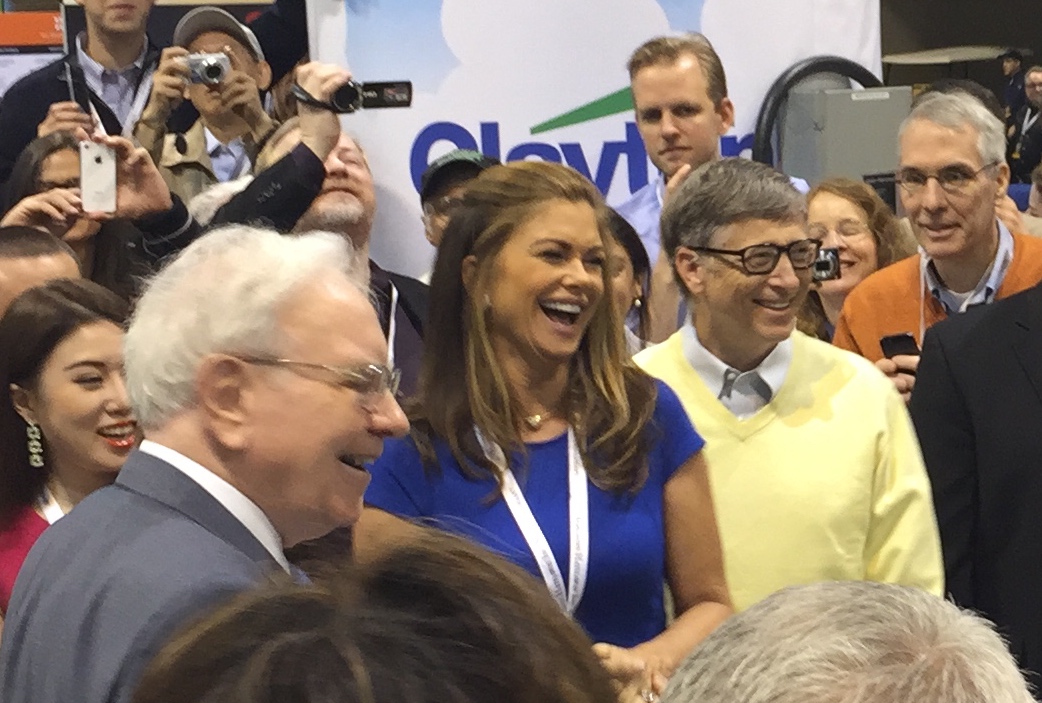
Warren Buffett has done something rare in the world of dynastic wealth and institutional philanthropy: he told an uncomfortable truth in public. In a CNBC interview this week, the 94-year-old Berkshire Hathaway chairman described Bill Gates' relationship with the late convicted sex offender Jeffrey Epstein as "distasteful" — and confirmed that his children, not the Bill & Melinda Gates Foundation, will now be the stewards of the bulk of his remaining fortune.
The timing is not incidental. For the first time in roughly 20 years, Berkshire Hathaway's latest round of charitable stock donations excluded the Gates Foundation entirely. In its place, Buffett directed his remaining Berkshire shares toward foundations controlled by his own children — Susan, Howard, and Peter Buffett. The shift represents a redirection of what is ultimately a multi-billion-dollar philanthropic pipeline, one that had made Buffett the single largest outside donor to the Gates Foundation since his landmark 2006 pledge.
Buffett was careful in how he framed it. He said he and Gates had enjoyed a "wonderful friendship" and acknowledged he had his own history of misjudging personal associations — noting that he himself had made mistakes by maintaining friendships with people "who weren't great." That admission, whatever it covers, does not soften the central point: he chose not to route his legacy capital through an institution whose most prominent figurehead spent years cultivating a documented relationship with Epstein, even after Epstein's 2008 conviction for soliciting prostitution from a minor.
Gates' meetings with Epstein — which Gates himself has acknowledged, calling them a mistake — began after that conviction and continued for years. The relationship included multiple visits to Epstein's Manhattan townhouse and at least one trip on Epstein's private plane. Gates has maintained that the meetings were purely transactional, centered on potential philanthropic fundraising, and that he deeply regrets them. That explanation has never fully satisfied critics, and clearly it did not fully satisfy Buffett.
What makes Buffett's move significant is not just the money — it is the signal. The Gates Foundation is one of the most powerful private philanthropic entities on Earth, with an endowment approaching $70 billion and influence over global health, agricultural policy, and education systems across multiple continents. When the man who was its most consequential external benefactor quietly walks away and then explains why on television, that is not a minor administrative reshuffling. That is a verdict.
Buffett's stated rationale for the shift also includes a simpler, less charged explanation: his children are now ready. He has said publicly that he wants his wealth distributed after his death, not managed perpetually by an institutional foundation in his name — a pointed philosophical contrast with Gates, whose foundation is explicitly designed for long-term endurance. The Buffett family foundations operate with a mandate to spend down their assets within a generation, a model Buffett has long preferred over the creation of philanthropic dynasties.
Still, the sequencing matters. Buffett did not announce this as a clean, forward-looking governance story about family readiness. He answered a question about Epstein directly, called the Gates association distasteful, and let the connection between that judgment and his philanthropic decisions speak for itself. That is either candor or calculation — possibly both — from a man who has spent 60 years being very deliberate about what he says and when.
What remains unresolved is how the Gates Foundation itself absorbs the reputational weight of this moment. The foundation has continued its work largely insulated from the Epstein controversy by the sheer scale of its global programs and the procedural distance between Gates personally and its institutional operations. But Buffett's withdrawal strips away the argument that serious, clear-eyed philanthropic actors have evaluated the situation and remained comfortable. At least one of them just publicly said he wasn't — and moved his money accordingly.
For those who have watched the Epstein network story develop over years — through court documents, deposition transcripts, and the unsealed files from the Virginia Giuffre civil litigation — Buffett's statement will land less as a revelation than as a confirmation of what was already visible in the public record. The more pointed question now is which other institutional partners, endowments, and co-donors are quietly running the same calculus Buffett just ran out loud.
Who is covering this (18+ outlets)
- NewsBytesBuffett says Bill Gates' association with Epstein was 'distasteful'
- NewserBuffett: Why My Kids, Not Gates, Will Give Away Fortune
- Mail OnlineBuffett reveals why he cut Bill Gates donations over Epstein links
- Business InsiderThe top 4 highlights from Warren Buffett's latest interview
- Economic TimesWarren Buffett says he initiated Berkshire's Alphabet bet, but it is not his favourite. Here's why
- VnExpress International – Latest news, business, travel and analysis from VietnamWarren Buffett stops donating to Bill Gates' charity as his children now ready to handle his wealth
- Alliance magazineWarren Buffett stops Gates Foundations donations after Epstein links - Alliance magazine
- International Business Times UKWarren Buffett Breaks Silence on Bill Gates' Epstein Ties as He Cuts Foundation From $140B Fortune
- Free Press Journal'I Made Mistake In Choosing Friends': Warren Buffet Says As He Excludes Gates Foundation From His Annual Berkshire Stock Donations
- BusinessWorldBuffett says his children are ready to distribute his fortune, calls Bill Gates' Epstein ties 'distasteful'
- Yahoo NewsWarren Buffett spoke about Bill Gates' Epstein ties -- and why he's stopped giving money to the Gates Foundation
- Eagle-TribuneAP Business SummaryBrief at 8:52 p.m. EDT
- NASDAQ Stock MarketWarren Buffett Just Cut the Bill Gates Foundation From His Annual Donation for the First Time Since 2006. The Missing $4.5 Billion Goes to His Children's Charities.
- Yahoo! FinanceWarren Buffett Just Cut the Bill Gates Foundation From His Annual Donation for the First Time Since 2006. The Missing $4.5 Billion Goes to His Children's Charities.
- The Motley FoolWarren Buffett Just Cut the Bill Gates Foundation From His Annual Donation for the First Time Since 2006. The Missing $4.5 Billion Goes to His Children's Charities.
- www.donga.comBuffett ends donations to Gates Foundation
- San Bernardino SunWarren Buffett explains why his kids, not the Gates Foundation, will now give away all his fortune
- San Mateo Daily JournalWarren Buffett explains why his kids, not the Gates Foundation, will now give away all his fortune
See what people are saying about this story on X.