
Police Dossier: Bomb Plots Targeting Messi Were the Gravest Threat at the 2026 World Cup
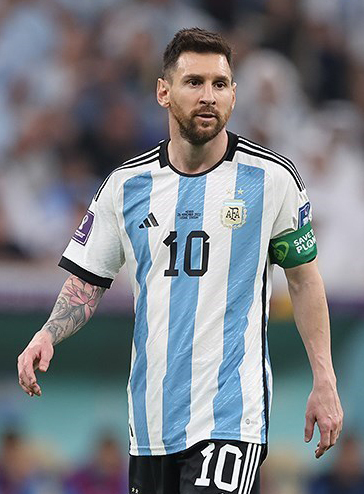
The most watched sporting event on American soil in a generation carried a security dimension that officials kept almost entirely out of public view. A police dossier compiled during the 2026 FIFA World Cup — held across the United States, Canada, and Mexico — recorded multiple threats against Lionel Messi that included alleged plots to kill him using explosives, with one reported scheme described in terms of detonating four bombs in proximity to the Argentine captain. Of all the threats logged against players, coaches, officials, and referees across the tournament, the document classified those directed at Messi as the gravest in category and intent.
The dossier was not a routine precautionary file. Security agencies from the United States and participating nations fed intelligence into an FBI-coordinated network specifically constructed for the tournament, and the Messi threats triggered the highest tier of that apparatus. Cristiano Ronaldo was also named in the document as a target of serious threats, indicating that the danger was not confined to one man but clustered around the sport's two most globally recognizable figures.
What makes the document striking is its specificity. General threats against celebrities are a background noise of major events. Threats detailed enough to involve explosive placement methodology, on the other hand, represent a qualitatively different level of operational planning — or at least a qualitatively different level of credibility as assessed by the agencies receiving them. The dossier's language around the Messi plots used the word "assailants," implying more than one actor and more than casual ideation.
FIFA and the U.S. Department of Homeland Security publicly positioned the 2026 tournament as the most security-intensive World Cup ever staged, with a federal inter-agency framework that included the FBI, Secret Service, and local law enforcement in all eleven American host cities. Dallas, one of the host cities listed in connection with the threat intelligence, is among the venues where Messi's Inter Miami featured in fixtures. None of the operational security briefings released to the public during the tournament disclosed the specific nature or volume of threats against individual players.
That silence was a choice. Tournaments of this scale operate under deliberate threat-suppression protocols — the calculus being that disclosure creates panic, emboldens copycat actors, and hands hostile parties a roadmap of what is and isn't being monitored. The logic is defensible. The consequence is that the public watched Messi lift the ball on a pitch in a stadium without any knowledge that law enforcement had spent weeks working through credible scenarios for his assassination. Whether that is responsible operational security or a form of institutional deception by omission is a question worth pressing.
Messi himself gave no public indication during the tournament that he was operating under heightened personal threat. His performances, his interactions with fans, his post-match availability — nothing in his visible conduct suggested a man aware he was the subject of bomb-plot intelligence. Whether he was fully briefed, partially briefed, or kept in the dark by his own security detail and FIFA is not established by the document as reported. The Argentine Football Association has not commented publicly on the dossier's contents.
The broader threat picture logged in the file extended well beyond the two superstar players. Referees and match officials were recorded as targets — a detail that points toward organized or ideologically motivated actors rather than the parasocial obsessives who typically generate individual-player threats. Match officials have no global fan base, no tribal following, no symbolic value to a casual antagonist. Their inclusion in a threat dossier alongside Messi and Ronaldo suggests the intelligence pointed toward disruption of the tournament as an institution, not merely violence against famous individuals.
None of the plots described in the dossier resulted in an attack. The 2026 World Cup concluded without a major security incident involving players or officials. But the absence of catastrophe is not the same as the absence of danger, and the document is a reminder that the sanitized broadcast product — the color commentary, the sponsor graphics, the penalty shootout drama — sat on top of a security operation managing threats that, had any of them materialized, would have rewritten the event entirely. The dossier exists. The threats were real enough to be classified, tracked, and acted upon by federal agencies. What happened in the spaces between those threats and the final whistle is a story that has barely begun to be told.
Who is covering this (18+ outlets)
- National Daily NGMessi reportedly faced multiple bomb threats during 2026 World Cup
- P.M. NewsMessi targeted in multiple bomb threats -- Report
- VanguardMessi faced multiple threats during 2026 World Cup -- Report
- Naija NewsPolice Report Reveals Threats On Lionel Messi, Ronaldo Lives
- The Whistler Nigeria'Assailants Plotted To Assassinate Messi At World Cup'
- Punch NewspapersMessi targeted in bomb threats during World Cup - Report
- PratidinMessi Targeted by Death Threats During World Cup 2026
- myKhel.comLionel Messi Was a Target at the World Cup: What the Police Dossier Reveals
- Hindustan TimesLionel Messi faced chilling death threats at 2026 World Cup; disturbing details emerge: 'Blowing him up with 4 bombs'
- Rolling OutLionel Messi and Ronaldo was targeted by bomb threats, what report reveals
- GhanaWebUS Police uncover chilling plot to assassinate Messi at the 2026 World Cup
- Daily Post Nigeria2026 World Cup: Messi target of assassination attempts in US
- GiveMeSport2026 World Cup: Lionel Messi Assassination Threat Revealed - Ronaldo Also Harassed
- ProthomaloMessi was target of bomb threats during World Cup, leaked FBI files reveal
- The News InternationalMessi faced most threats at 2026 World Cup including suicide plot: report
- thefinancialexpress.com.bdMessi received several death threats during World Cup: reports
- Goal.comPolice report reveals: man wanted to murder Lionel Messi in a brutal manner during the World Cup
- Republic World'Lionel Messi Bomb Threat': Chilling FIFA World Cup Terror Plot Revealed, Cristiano Ronaldo Also Targeted
See what people are saying about this story on X.