
US Strikes Iranian Soil as Gulf States Unite Against Tehran's Regional Assault
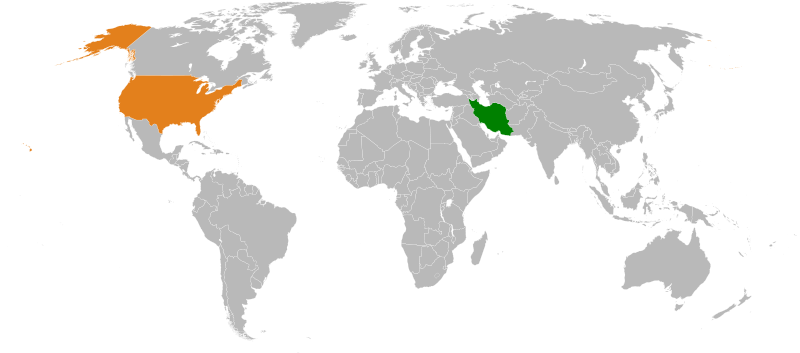
The United States crossed a threshold on Monday that American administrations have long circled warily: direct kinetic strikes against targets on Iranian territory. US Central Command confirmed via its official channel that American forces struck Iranian positions in Goruk and on Qeshm Island, both situated along the strategic chokepoint of the Strait of Hormuz — through which roughly a fifth of the world's traded oil passes every day. CENTCOM stated the strikes were a direct response to Iran's downing of an American MQ-1 Reaper drone, framing the action as proportional retaliation under the laws of armed conflict.
The geography is not incidental. Qeshm Island sits at the mouth of the Strait, hosting Iranian naval and logistics infrastructure that Western analysts have long identified as central to Tehran's ability to threaten maritime traffic. Goruk, on the mainland coast directly opposite, forms part of the same chokepoint architecture. Hitting both simultaneously signals that Washington was not threading a needle — it was sending a message to Iranian military planners about the cost of escalation.
While US jets were confirming their strikes, a separate and equally significant front opened further up the Gulf. Iran launched a combination of ballistic missiles and drones targeting Kuwait — a sovereign state, a US treaty partner, and home to major American military basing. Multiple explosions were reported in the area of Bandar Abbas on the Iranian side of the Strait as well, though the full picture of that damage was not immediately confirmed. Residents in multiple districts of Tehran reported the sound of fighter jets overhead, suggesting either Iranian air defense activity or the presence of additional aircraft in the region.
Kuwait's condemnation was swift and unequivocal, and it was rapidly joined by virtually every significant Arab voice in the region. Saudi Arabia, the UAE, Qatar, Jordan, Egypt, the Gulf Cooperation Council as a bloc, the Arab Parliament, and the Muslim World League all issued formal statements condemning Iran's actions against Kuwait as unprovoked aggression against a fellow Arab state. The near-unanimity is politically significant: this is not a situation in which Arab governments are hedging or offering diplomatic cover. The regional consensus being constructed in real time is one that isolates Tehran and lends legitimacy to whatever further military or economic response follows.
The Iranian targeting of Kuwait demands its own analysis. Kuwait is not a combatant. It does not share a land border with Iran. It has historically attempted to maintain working diplomatic relations with Tehran even as Saudi Arabia and the UAE hardened their positions. An Iranian strike on Kuwaiti territory therefore represents either a dramatic escalation of regional aggression or an attempt to signal to Gulf states hosting American forces that proximity to Washington carries direct military risk. Neither interpretation is reassuring for Gulf stability.
What is confirmed, verified, and on the record: CENTCOM's announcement of strikes on Goruk and Qeshm Island; the stated justification of the downed MQ-1 Reaper drone; reports of explosions at Bandar Abbas; sound of jets over Tehran per residents; Kuwait and its Gulf neighbors' formal condemnations of Iranian missile and drone attacks. What remains unconfirmed at this stage: battle damage assessment from the US strikes, the precise nature and scale of the Iranian attack on Kuwait, casualty figures on any side, and whether either government intends further escalation or is seeking an off-ramp.
The Trump administration has shown considerably less appetite for the kind of careful de-escalatory signaling that characterized prior administrations' handling of Iranian provocations. Striking Iranian soil directly, rather than proxy assets in Syria or Iraq, marks a qualitative shift in how Washington is choosing to draw lines. Whether that shift deters or emboldens further Iranian action is the open question every government between Cairo and Karachi is now war-gaming.
For ordinary people watching tanker markets, fuel prices, and the slow-motion unraveling of Gulf security architecture, Monday was not another day of manageable tension in a chronically tense region. It was something closer to a turning point — the kind that looks obvious in hindsight and is always slightly unbelievable in the moment it happens.
Who is covering this (14+ outlets)
- Qatar News AgencyUAE Slams Iranian Attacks on Kuwait
- see.newsEgypt Condemns Repeated Iranian Attacks on Kuwait | Sada Elbalad
- thedailyobserver.newsKuwait, Saudi Arabia, and GCC Condemn Iranian Missile and Drone Assaults - thedailyobserver.news
- Arab NewsSaudi Arabia condemns Iranian attacks on Kuwait
- armenpress.amSaudi Arabia condemns Iranian attacks on Kuwait
- Asharq Al-Awsat EnglishArab Parliament, MWL Strongly Condemns Iranian Aggression against Kuwait
- Middle East EyeQatar condemns Iran's 'repeated attacks' on Kuwait
- SAMAA TVKuwait, Saudi Arabia, GCC condemn attacks on Kuwait
- Emirates24|7UAE strongly condemns Iranian missile and drone attacks on Kuwait
- Daily TimesKuwait and Saudi Arabia unite against Iran attacks
- UrduPointSaudi Arabia condemns alleged Iranian attacks on Kuwait
- Jordan TimesJordan condemns Iranian 'repeated' attacks on Kuwait
- S A N ASyria condemns new Iranian aggression against Kuwait, expresses solidarity
- وكاله عمون الاخباريهAmmonnews : Jordan condemns repeated Iranian attacks on Kuwait
See what people are saying about this story on X.