
EU Extends Ukraine Refugee Rights to 2028 — But Shuts the Door on Men Who Can Fight
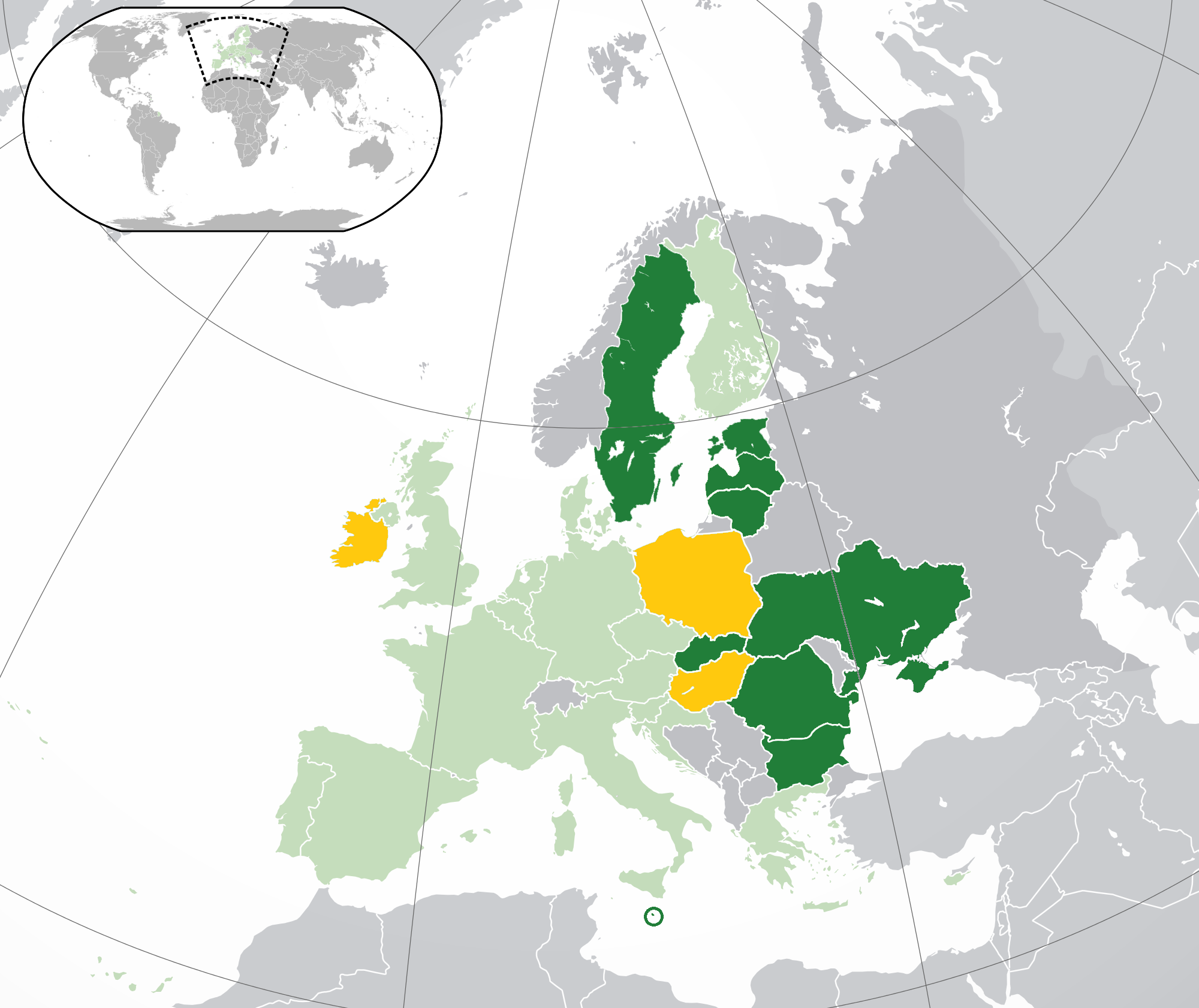
For three years, the European Union's Temporary Protection Directive functioned as the closest thing the bloc had to an open-arms policy: Ukrainians fleeing Russia's full-scale invasion could arrive, work, access healthcare, enroll children in school, and claim social benefits across all 27 member states — no asylum queue, no years-long hearing, no bureaucratic lottery. On Wednesday, July 15, EU member state ambassadors voted to extend that arrangement through March 2028. The headline is generous. The fine print is something else entirely.
Embedded in the extension is a new condition that has no precedent in the directive's history: men of military age who arrive in the EU after the revised rules take effect will be excluded from temporary protection status unless they can demonstrate they are not evading conscription under Ukrainian law. The EU is not merely offering refuge — it is now acting, at least partly, as an enforcement instrument for Kyiv's mobilization apparatus.
The logic driving the carve-out is not hard to trace. Ukraine lowered its military conscription age to 25 in 2024 and has been engaged in a grinding, attritional war now entering its fifth year. Kyiv has made no secret of its frustration with the estimated hundreds of thousands of Ukrainian men living across Europe who are of fighting age and out of reach of the draft. Poland, which hosts the largest Ukrainian refugee population in the EU, has been among the loudest voices pushing for the bloc to stop functioning as an inadvertent draft-dodger sanctuary.
What the EU ambassadors approved is, in effect, a geopolitical compromise dressed in humanitarian language. The core protection — for women, children, the elderly, and men who arrived before the cutoff — remains intact and is now locked in for nearly three more years. But the extension deliberately leaves the question of military-age male arrivals in a gray zone, one that individual member states will now interpret and apply with predictable inconsistency. A Ukrainian man who left before the new rules is protected. One who leaves after them is not. The border between refuge and refusal is now a date stamp.
This raises questions that the bloc's official statements have not directly answered. What happens to a man who leaves Ukraine after the cutoff but has a documented medical exemption from service? What about men from ethnic or religious minorities with grounds for conscientious objection? What about those fleeing regions where territorial conscription units have been reported using coercive or violent recruitment tactics — allegations documented by Ukrainian civil society organizations and acknowledged in Ukrainian parliamentary debates? The directive extension, as approved, does not appear to distinguish between lawful draft-age men and those with legitimate grounds to avoid service. That ambiguity will land, unevenly, at the desks of national immigration officials.
There is also a structural irony worth naming plainly. The Temporary Protection Directive was invoked in March 2022 under emergency powers specifically because the normal asylum system was deemed too slow, too adversarial, and too ill-suited to the scale and speed of the Ukrainian displacement crisis. It was, explicitly, a system designed to not ask hard questions in the middle of a catastrophe. The new carve-out reverses that logic for one category of person: military-age men are now required to affirmatively prove something — compliance with Ukrainian conscription law — before they can access the same protection that every other Ukrainian receives automatically. The burden of proof has flipped, and it has flipped only for them.
Kyiv's position is internally consistent, if uncomfortable: the state is fighting an existential war, it needs soldiers, and it sees the EU as a place where its legal obligations go to disappear. Ukrainian President Volodymyr Zelensky's government has repeatedly pressed European partners to stop facilitating what it characterizes as mass desertion. From that vantage point, the EU's new condition is simply the bloc finally accepting its co-responsibility in the war effort. Critics, including Ukrainian human rights lawyers and some European civil liberties organizations, frame it differently: as the outsourcing of military conscription enforcement to a supranational body that has no democratic mandate from Ukrainian citizens and no ability to assess individual circumstances at scale.
What is confirmed: the extension is approved at the ambassadorial level and is expected to be formally adopted. What is not yet clear: exactly how individual member states will implement the military-age exclusion, what documentation will be required, and whether any EU-level appeal mechanism will exist for men denied protection under the new rule. The gap between the policy decision and its operational reality is where the real consequences will live — and that gap, for now, remains wide open.
Who is covering this (17+ outlets)
- KyivPostEU Ties New Protection for Ukrainians to Military Obligation Compliance
- ANSA.itEU extends right to stay for Ukrainians, excludes military-age men - News
- anewsEU extends temporary protection for Ukrainians fleeing war
- defence24.comThe European Union limits protection for Ukrainian conscripts
- eutoday.netEU Extends Ukraine Refugee Protection to 2028 as Long-Term Status Question Remains
- WTX NewsEU countries extend temporary protection for Ukrainian refugees until March 2028. | WTX News
- Le Monde.frEU extends right to stay for Ukrainians, except for men of military age
- CNAEU extends right to stay for Ukrainians, excludes military-age men
- Українська правдаEU to deny protection to Ukrainians evading military service under provisional decision
- dpa InternationalEU states back stricter entry rules for military-age Ukrainian men
- Euronews EnglishEU excludes military-age Ukrainian men from temporary protection
- The Kyiv IndependentEU agrees to extend protection for Ukrainians but won't grant it to potential conscripts
- Arab NewsEU extends right to stay for Ukrainians, excludes military-age men
- Ukrinform-ENEU countries extend temporary protection for Ukrainians through March 2028
- TASSEU to revoke asylum eligibility for Ukrainian military-age men from March 2027
- The Sofia GlobeEU will not grant temporary protection to those who evade their military obligations in Ukraine
- Interfax-UkraineEU extends temporary protection for Ukrainians until March 2028 and limits it to new applicants of military age
See what people are saying about this story on X.