
Messi Wins Princess of Asturias Award — and MLS Gets a Legacy It Never Earned
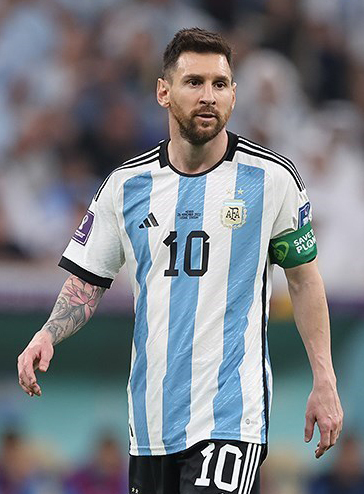
Lionel Messi is now the recipient of the Princess of Asturias Award for Sports — one of the Spanish-speaking world's most prestigious cultural and civic honors, awarded annually by a jury in Oviedo to figures of international distinction. He is only the third soccer player in the award's history to receive it, joining a lineage that reflects not just athletic achievement but demonstrated social and cultural impact. The jury's formal citation pointed explicitly to his influence beyond the pitch.
The timing is worth sitting with. Messi is not collecting this award from the twilight of a Barcelona penthouse or a Parisian farewell tour. He's collecting it as an active player in Major League Soccer, the American domestic league that spent the better part of two decades being politely ignored by the global game. That context is not incidental — it's the whole story.
When Messi arrived at Inter Miami in the summer of 2023, the transformation was immediate and vertiginous. Fort Lauderdale became a temporary media capital. Cameras that had never pointed at an MLS training ground were pointing at this one. The league's streaming numbers moved in ways they had not moved before. Ticket prices for Inter Miami away fixtures in cities that had never sold out for a regular-season MLS match began climbing toward figures that would embarrass a playoff game. The celebrity attendance — courtside-caliber names appearing in the stands at a Florida soccer stadium — was not organic. It was gravitational. Messi pulled it.
The Beckham comparison is inevitable and instructive. David Beckham's 2007 arrival at LA Galaxy produced a genuine media eruption, but the attention had a ceiling. Beckham was a global brand arriving in a league that remained, structurally and culturally, a domestic curiosity. What made Messi's arrival categorically different was that he came as the undisputed greatest player alive — fresh from Argentina's 2022 World Cup triumph in Qatar, the one piece of hardware that had eluded him for his entire career — and he came not in mid-career but in his late thirties, still capable of producing moments that stopped broadcast professionals mid-sentence.
The Princess of Asturias Award adds a dimension that pure athletic statistics cannot. The prize, administered by the Princess of Asturias Foundation and bearing the name of the heir to the Spanish throne, has historically recognized figures whose work carries a demonstrable mark on society — scientists, writers, international institutions, and on rare occasion, athletes whose reach extends into the cultural fabric. Messi's jury citation underscored his social footprint: the youth development work conducted through his foundation, the role he has played as a figure of national identity for Argentina, and the scale of his influence on how football is practiced and perceived globally.
What the award does not do, and what honest coverage should not do either, is launder the institutional story of MLS into something it has not yet become. The league benefited enormously from Messi's arrival, but benefiting from a singular gravitational force is not the same as having built the conditions that attracted it. Messi chose Miami, in part, because of existing personal and commercial ties to South Florida and to the Inter Miami ownership group. The league did not earn him the way a competitive sporting system earns its marquee talent. It received him. The distinction matters for anyone trying to assess what American soccer's actual developmental arc looks like post-Messi.
That arc is still being written, and it runs directly into the 2026 FIFA World Cup, which the United States, Canada, and Mexico will co-host. Whether Messi will participate for Argentina at 38 years old remains genuinely open. He has not closed the door publicly, and Argentina's federation has been careful not to close it for him. But the World Cup's presence on American soil creates a peculiar narrative loop: the player whose arrival legitimized MLS's global ambitions may or may not be on the field when the world's biggest tournament finally comes to the country where he chose to finish his playing career.
For now, the Princess of Asturias Award sits alongside the eight Ballon d'Or titles, the World Cup, the Copa América, the Champions League medals, and the staggering volume of individual records that have accumulated over two decades at the highest level of the sport. At some point, the accumulation stops being a list and becomes an argument — the argument that you are watching the most decorated athlete in the history of the most widely played sport on earth. The jury in Oviedo made that argument official, with the full weight of one of Europe's oldest civic prizes behind it.
Who is covering this (11+ outlets)
- World Soccer TalkLionel Messi becomes the third soccer player ever to win the Princesa de Asturias Sports Award
- fcbarcelona.comMessi wins 2026 Princess of Asturias Award for Sports
- New Mail NigeriaMessi Adds Princess of Asturias Sports Award to His Ever-Growing Trophy Cabinet
- Goal.comBarcelona congratulate Lionel Messi as Inter Miami star claims one of Spain's most prestigious honours
- NewsXLionel Messi Wins Prestigious Princess of Asturias Award, What Is The Honour All About? All You Need To Know
- Enterate LatinoMessi crowns his extraordinary list of achievements with the Princess of Asturias Award for Sports - Enterate Latino
- Dimsum DailyMessi wins 2026 Princess of Asturias Sports Award
- Punch NewspapersMessi wins 2026 Princess of Asturias Award for Sports
- Azertag News-AgencyLionel Messi wins prestigious Princess of Asturias Award for Sports 2026
- asUnstoppable: Lionel Messi adds another prestigious award to his collection
- GameReactorLeo Messi awarded hugely prestigious Princess of Asturias Award for Sports, jury highlights his social impact
See what people are saying about this story on X.