
Washington Sanctions Cuba's President While the Island Runs Out of Water
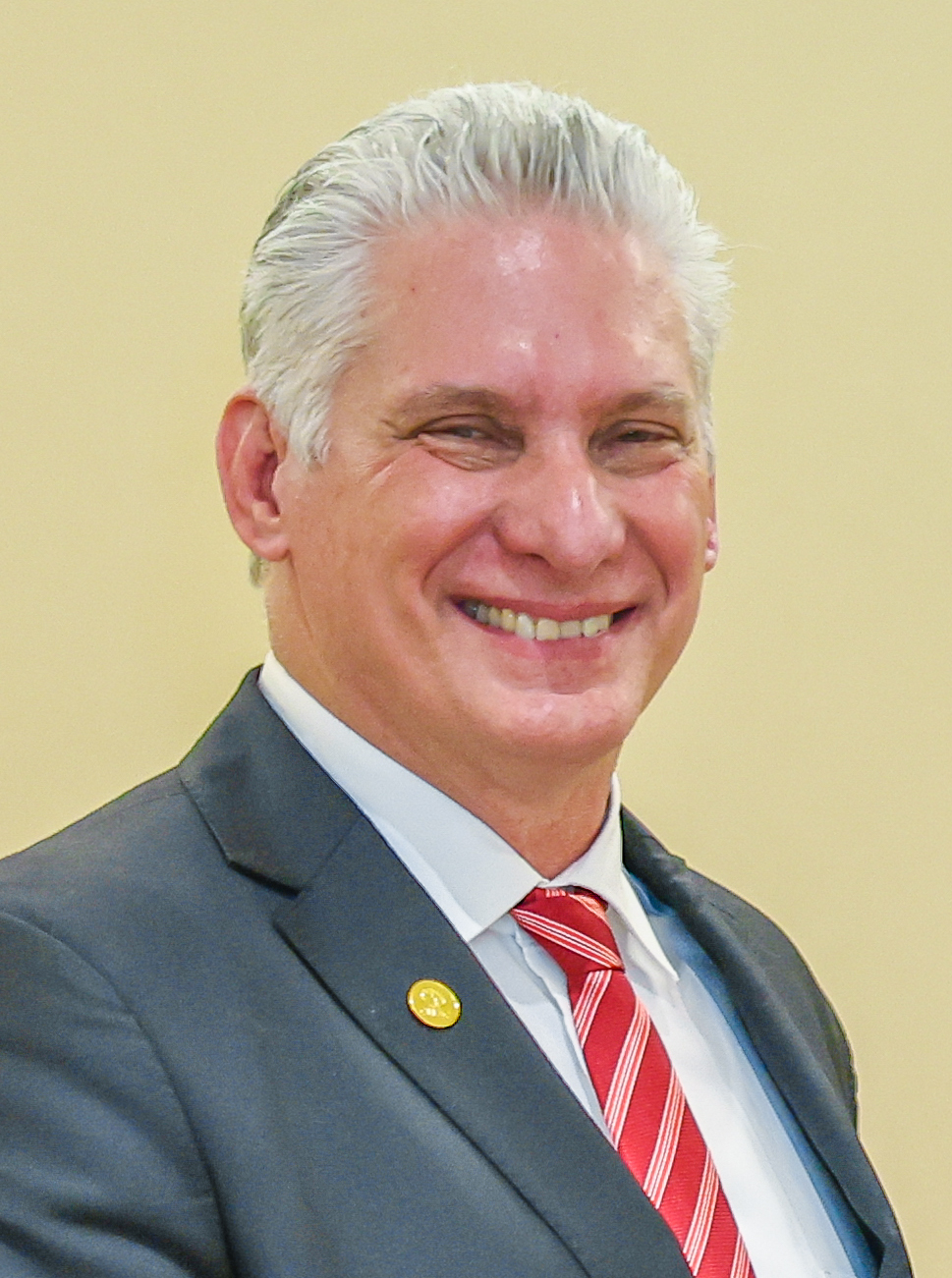
The U.S. Treasury Department has designated Cuban President Miguel Díaz-Canel, his wife Lis Cuesta Peraza, and three other individuals under sanctions authority, adding their names to a growing list of Cuban officials whose assets in U.S. jurisdiction are now frozen and who are barred from transacting with American entities. The move is the latest in a sustained pressure campaign by the Trump administration against Havana — one that has accelerated in pace and scope since the administration returned to office.
Among the newly sanctioned is Alejandro Castro Espín, the son of former President Raúl Castro and the late revolutionary icon Vilma Espín. Alejandro Castro Espín is not a ceremonial figure. He served as an adviser to Cuba's Defense and National Security Commission — a body that sits at the intersection of intelligence, military command, and political control on the island — and was present at high-level meetings that U.S. officials have characterized as directly relevant to Cuba's internal repression apparatus. That he is being sanctioned alongside the sitting president, rather than separately, signals that Washington is targeting a networked power structure, not individual bad actors.
The Treasury filing identifies the legal basis for the designations under existing Cuba-related executive authority, citing conduct related to human rights abuses and support for the Cuban government's security forces. The Cuban government has not, as of the designations, provided any public accounting of its own that would satisfy those specific allegations. Havana's standard response to U.S. sanctions — that they constitute illegal economic warfare against a sovereign nation and cause collective punishment of ordinary Cubans — was swiftly issued through state channels.
That counterargument is not without force, and it deserves a straight look rather than a dismissal. Cuba is, by any honest measure, in a state of sustained humanitarian deterioration. Rolling blackouts now stretch to 22 hours a day in parts of the country. Tap water access has become intermittent in ways that were not routine even during the so-called Special Period of the 1990s. Fuel, medicine, and basic food staples remain chronically short. The Cuban government attributes this to the U.S. embargo — what it calls the blockade — and to deliberate economic strangulation. U.S. officials attribute it to the failures and corruption of a command economy and a security state that diverts resources to regime maintenance.
Both of those things can be simultaneously true. What is not in serious dispute is that the people absorbing the consequences of that spiral are not the men now named on Treasury's list. Díaz-Canel is not waiting in line for rationed bread. The sanctions, as a practical matter, restrict the designated individuals' ability to move money or travel through U.S.-linked financial systems — systems that Cuba's elite has always navigated through intermediaries, third-country banks, and the kinds of opaque arrangements that targeted sanctions are notoriously imperfect at closing off.
The Biden administration pursued a more ambivalent Cuba policy, cycling through periods of partial easing and reimposition of restrictions in response to the July 2021 protests and subsequent crackdowns. The Trump administration has taken a harder line from the outset, re-listing Cuba as a State Sponsor of Terrorism in January — a designation that carries significant secondary consequences for foreign firms doing business with the island — and now escalating to direct designation of the head of state himself. Sanctioning a sitting president is not a routine step; it is a statement of intent, whether or not it changes anything on the ground in Havana.
What the administration has not done is articulate a clear theory of change. Sanctions work when the target has something to lose inside the sanctioning country's financial orbit and when there is a credible off-ramp — a set of conditions under which the pressure lifts. Neither of those elements is obviously present here. Cuba's elite does not hold its wealth in New York. And the conditions Washington has historically attached to Cuba policy — free elections, release of political prisoners, dismantling of the one-party state — are conditions the Cuban government has shown, across six decades and eleven U.S. presidential administrations, no intention of meeting in response to external coercion alone.
The harder, less comfortable story is that the sanctions announcement landed the same week that international health and civil society monitors were documenting the acute conditions facing ordinary Cubans on the island — people who had nothing to do with Alejandro Castro Espín's advisory role on a security commission and who will not benefit from his name appearing on a Treasury list. Washington gets a press release. Díaz-Canel gets to tell his population that the enemy is circling. And Cubans keep waiting for the lights to come back on.
Who is covering this (18+ outlets)
- Dimsum DailyU.S. expands sanctions against Cuba's leadership
- The Indian ExpressUS sanctions Cuban President Miguel Díaz-Canel in latest pressure on its leadership
- The News InternationalTrump administration sanctions Cuba's President Díaz-Canel and allies
- TimesNowUS Sanctions Cuban President Miguel Díaz-Cane In Latest Move To Pressure Island
- dpa InternationalUS sanctions Cuban President Díaz-Canel and family members
- Economic TimesCuba crisis: After power outages of up to 22 hours a day, shortages of tap water, U.S now imposes sanctions on President, Raul Castro, family members
- Yahoo NewsUS imposes sanctions on Cuban president, Castro family members
- The Globe and MailU.S. sanctions Cuban President, drawing condemnation from Havana
- ThePrintUS imposes sanctions on Cuban president, Treasury website shows
- WFMJThe Latest: Scott Bessent testifies before the House on Treasury Department priorities
- CBS NewsU.S. sanctions Cuban President Miguel Díaz-Canel in latest pressure on its leadership
- 毎日新聞US sanctions Cuban President Miguel Diaz-Canel in latest move to pressure island's leadership
- NewsdayUS sanctions Cuban President Miguel Díaz-Canel in latest move to pressure island's leadership
- Las Vegas SunUS sanctions Cuban President Miguel Díaz-Canel in latest move to pressure island's leadership
- NewserUS Adds to Sanctions Against Cubans
- Canon City Daily RecordUS sanctions Cuban President Miguel Díaz-Canel in latest move pressuring island's leadership
- paNOWUS sanctions Cuban President Miguel Díaz-Canel in latest move to pressure island's leadership
- Azeri - Press Informasiya AgentliyiUS has imposed sanctions against Raul Castro's son and grandson
See what people are saying about this story on X.