
After Courts Block It, Trump's Team Plots a 20-Year War on Birthright Citizenship
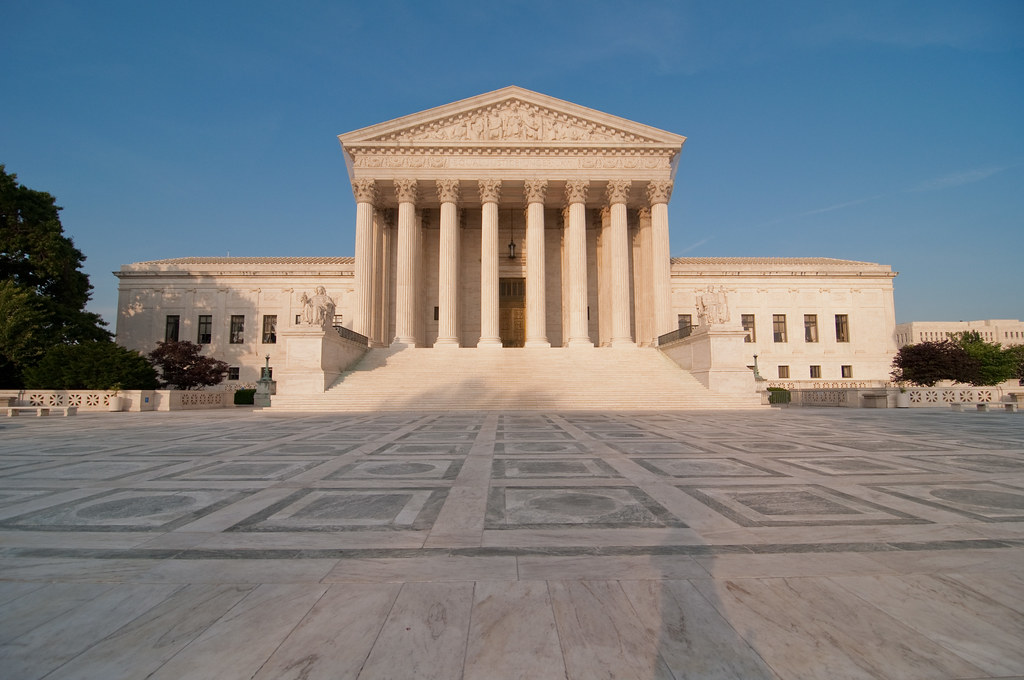
When the Supreme Court unanimously blocked the Trump administration's executive order on birthright citizenship this past term, the White House didn't treat it as a defeat. It treated it as an opening move. That is not spin or inference — it is what the people involved are saying, on the record, to anyone who will listen.
Iowa Solicitor General Eric Wessan put it plainly: the goal now is to flood legal academia with serious constitutional challenges to birthright citizenship, keep the question "fresh," and wait for the intellectual groundwork to shift the Overton window the way it shifted on abortion before Roe fell. The analogy to Roe v. Wade is not a journalist's framing — it is the framing being used by the strategists themselves.
The constitutional question they are targeting is the Fourteenth Amendment's citizenship clause, ratified in 1868, which reads: "All persons born or naturalized in the United States, and subject to the jurisdiction thereof, are citizens of the United States." For more than a century, the operative legal interpretation — anchored by the Supreme Court's 1898 ruling in United States v. Wong Kim Ark — has held that this clause means what it says: birth on U.S. soil confers citizenship, full stop. The conservative legal campaign now underway argues that "subject to the jurisdiction thereof" is a limiting phrase that excludes the children of undocumented immigrants and visa holders. That reading has never been accepted by a federal court of last resort. The strategists are trying to change that.
The immediate vehicle was an executive order signed in the opening days of Trump's second term, directing federal agencies to deny citizenship documents to children born in the United States to parents who are either undocumented or present on temporary visas. Federal judges moved to block it almost immediately — multiple injunctions issued within days, with courts at the district and appellate levels finding the order almost certainly unconstitutional on its face. The Supreme Court, in a decision that drew unusual cross-ideological agreement, ruled against the administration's attempt to let the order take partial effect while litigation continued. Chief Justice John Roberts, writing for the Court, did not mince words about the order's constitutional standing.
None of that stopped the White House. A subsequent executive order attempted to approach the same objective through a different mechanism — targeting what the administration calls "birth tourism," the practice of traveling to the United States specifically to give birth and secure citizenship for a child. The birth tourism angle is the more politically defensible entry point: the practice is real, documented, and involves a smaller universe of people. Federal data from the Centers for Disease Control and Prevention's National Center for Health Statistics shows births to mothers on tourist or business visas represent a fraction of a percent of total U.S. births annually — a statistically marginal phenomenon that the administration has worked hard to make appear epidemic. The rhetorical conflation of birth tourism with undocumented immigration is deliberate; the legal strategy requires treating them as the same constitutional problem.
What makes the long-game strategy significant is its institutional seriousness. This is not fringe activism. The lawyers involved — state solicitors general, Federalist Society-connected academics, former White House counsel alumni — are the same ecosystem that spent thirty years building the legal infrastructure that eventually overturned Roe v. Wade. They seeded law reviews, cultivated sympathetic judges, filed strategic test cases, and waited. The anti-Roe movement looked quixotic in 1990. It won in 2022. The people now targeting birthright citizenship are citing that timeline explicitly as their model.
The tactical wrinkle the administration has added is an "invasion" theory — the argument that the President's constitutional authority to repel invasion at the southern border creates an emergency carve-out from normal constitutional constraints, including the Fourteenth Amendment's citizenship guarantee. Legal scholars across the spectrum have greeted this theory with skepticism bordering on derision. But it does not need to win in court immediately to be useful; it needs to be taken seriously enough to justify further litigation, further appeals, and eventually a Supreme Court with a different composition or a different mood.
What is confirmed: the executive orders exist, the courts have blocked them, and the people designing the strategy have publicly described it as a generational project. What is alleged: that there is an organized, funded campaign — as opposed to a loose ideological alignment — coordinating this effort behind closed doors. What is unknown: whether the current Supreme Court's conservative majority has any appetite to revisit Wong Kim Ark, a question none of the justices have tipped their hand on. What is spin: the birth tourism emergency. The numbers do not support a crisis framing. The legal campaign does not actually depend on one.
The Fourteenth Amendment was written by Congress after the Civil War specifically to prevent a future government from defining certain categories of people born on American soil as non-citizens. Whether the current Supreme Court will eventually be asked to read that history away — and whether it will oblige — is now a live question with serious institutional momentum behind it. That is not alarmism. It is what the architects of the campaign are telling you themselves.
Who is covering this (18+ outlets)
- NewsDrumWhat Trump's birth tourism crackdown changes, and why courts may intervene
- NST OnlineTrump's attack on birthright citizenship faces uphill battle | New Straits Times
- Washington TimesCould an 'invasion' declaration undo the Supreme Court's birthright citizenship ruling?
- POLITICO'The next Roe v. Wade': Trump allies plot long campaign against birthright citizenship
- International Business Times UKWhite House Slammed for Serving 'Day-Old Fish Stew' Executive Order to Defy Supreme Court
- Daily SabahTrump's bid to curb 'birth tourism' faces fresh legal challenge
- RocketNews | Top News Stories From Around the GlobeWhat is birthright citizenship and how common is birth tourism in the US?
- The Business StandardTrump's attack on 'birth tourism' faces uphill legal battle after
- Alternet.orgWhite House strikes back with sneaky blueprint to defy the Supreme Court
- TheBlazeBirth tourism is only the beginning
- The New RepublicTrump Thinks He Can Defy the Supremes on Birthright Citizenship
- BusinessGhanaTrump again tries to limit US birthright citizenship with new executive orders
- MedindiaTrump Targets Birthright Citizenship and Birth Tourism
- stamford advocateNew Trump order puts birthright citizenship draws criticism from some in CT
- www.theepochtimes.comBirth Tourism Ads Targeting Chinese Highlight US Immigration Vulnerabilities
- OnManoramaWhat is the 'birth tourism' Donald Trump is talking about?
- Times LIVEWhat to know about Trump's new attempt to limit birthright citizenship
- Daily TimesTrump administration's birthright citizenship crackdown faces legal hurdles
See what people are saying about this story on X.