
67 Exorcisms, 42 Tapes, One Trial: The Only 'Possession' a Court Was Forced to Rule On
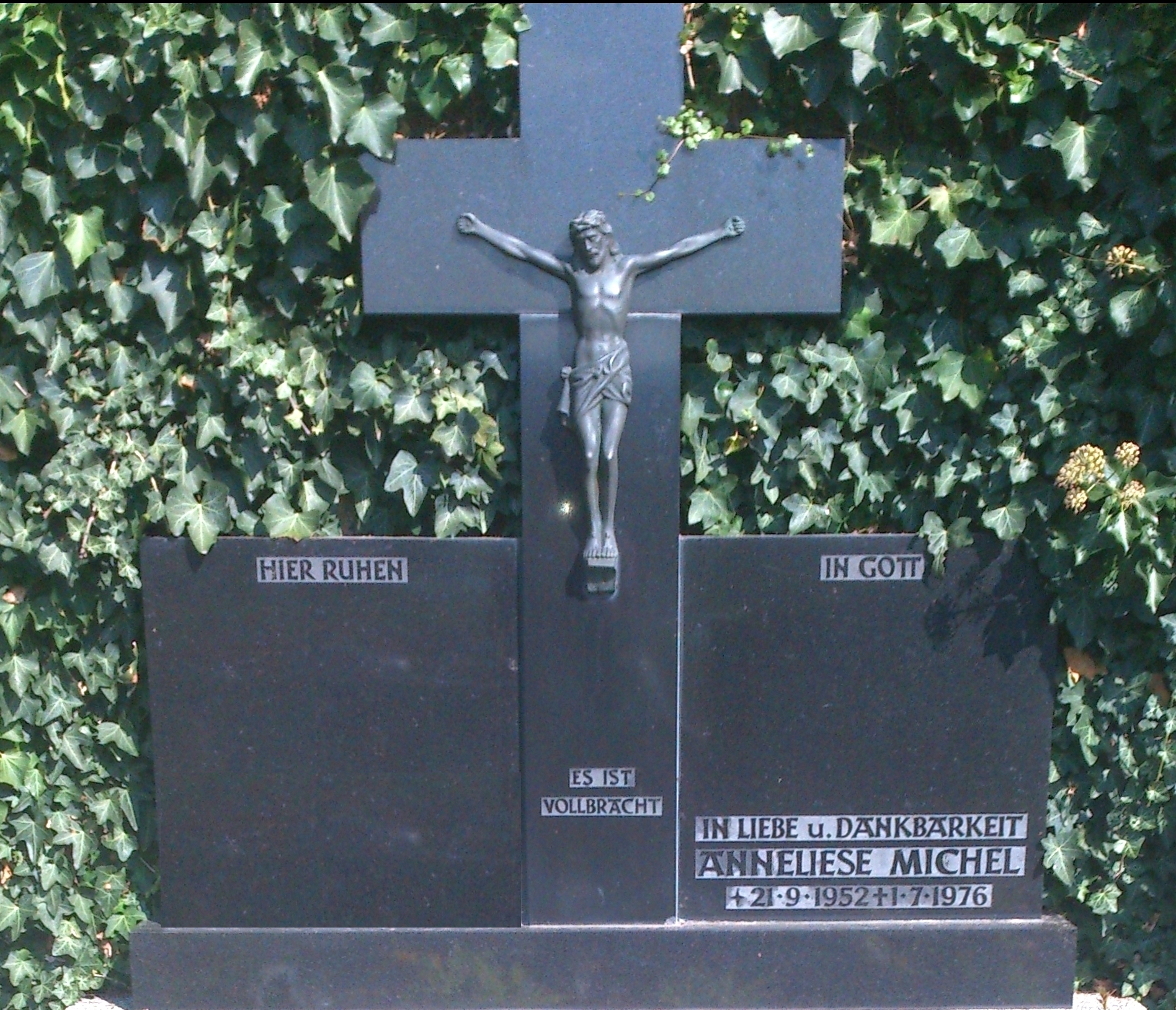
The only modern 'possession' whose evidence sits in a criminal court file is Anneliese Michel's, where audio of the rites was played as testimony and a German court ruled on what the recordings actually were. Most haunting cases dissolve into hearsay and faded memory. This one has a docket number. Two priests and two parents stood trial for negligent homicide, and the tapes — dozens of hours of them — were physical exhibits. That is what makes Klingenberg unique: a state court was forced, on the record, to decide whether what was on those tapes was a demon or a dying girl.
The facts are grim and well-attested. Anna Elisabeth Michel was born in 1952 in Catholic Bavaria. At sixteen she suffered a convulsion and was diagnosed with epilepsy — specifically temporal lobe epilepsy — and treated with anticonvulsant medication. Her symptoms broadened over the following years into what psychiatry would call psychosis: she heard voices, saw demonic faces, became unable to tolerate religious objects, and grew convinced she was possessed. Medication and psychiatric care produced no improvement she accepted. By 1975, with the family's belief hardening, the Bishop of Würzburg authorized exorcism under the old Rituale Romanum. Over roughly ten months, two priests performed 67 sessions. The priests recorded them. On July 1, 1976, Anneliese died, weighing about 30 kilograms. The autopsy was unambiguous: death by malnutrition and dehydration.
The prosecution that followed is the spine of the evidence. In 1978, the district court at Aschaffenburg tried both priests and both parents. The defense did the thing almost no one in a possession case ever has to do: it submitted the primary recordings as proof of the supernatural. The tapes were played. On them you can hear the rites, the prayers, and Anneliese's voice — at times in registers and 'dialogues' the priests interpreted as multiple demons (the names invoked famously included Lucifer, Cain, Judas, Nero, and Hitler) arguing among themselves. To the believers in the room, this was the sound of the entities. The court had to weigh exactly that audio against the autopsy and the medical witnesses.
The expert testimony cut hard the other way. Medical and psychiatric witnesses told the court there was no possession — that the phenomena were the explicable product of temporal lobe epilepsy, psychosis, and a severe, religiously saturated upbringing that gave the illness its demonic content. Crucially, the prosecution's medical case included the point that became the heart of the verdict: by the final months Anneliese was being told to stop her anticonvulsant medication and to pray and fast instead, and she was allowed to waste away while exorcisms continued. A doctor, the experts argued, was needed; a priest was not enough. The court agreed. In April 1978 it convicted all four of negligent homicide. It then suspended the sentences — a finding that says, in effect: this was not malice, but it was a death that medical care would have prevented, and the supernatural explanation does not hold.
Now the fair part, because Inverted World does not flatten this into a tidy debunk. The tapes are genuinely unsettling, and the people involved were not con artists; they were sincere, frightened believers, including a young woman who, by the testimony, was at times lucid and herself consented to the rite. The 'multiple voices' phenomenon is real on the recordings — the open question is only its cause, and dissociative vocalization under extreme psychological and physiological distress is documented in clinical literature. The believer's strongest point is not the demons; it is that the medical system had already failed her, that the drugs and hospitalizations brought no relief she could live with, and that the Church stepped into a vacuum. None of that makes a demon real. It makes a tragedy more legible.
What the court did not resolve — what no court could — is the interior question. The verdict settled the legal cause of death: starvation, preventable, the responsibility of four named people. It did not, and could not, settle what Anneliese herself experienced. The recordings are still the closest thing the modern world has to 'evidence' of possession entered into a sworn proceeding, and a German criminal court listened to all of it and called it illness and neglect, not the Devil. You can find the autopsy conclusion, the charge, and the conviction in the record. You cannot find, anywhere in that file, the thing the tapes seem to promise: proof that something other than a human being was speaking.
Evidence & links (3)
See what people are saying about this story on X.