
Three Men Walked Out of a Locked Lighthouse and Into a Mystery That Was Half Invented Later
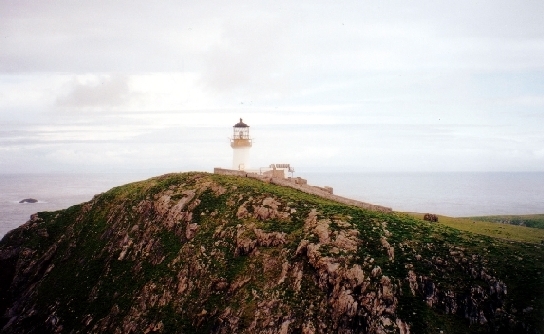
Three men were alone on a rock in the Atlantic, tending a lighthouse, and then they were gone, all three, from an island nobody else could reach. That is the true core of the Flannan Isles case, and it is genuinely unexplained. But almost everything you think you know about it, the half-eaten supper, the overturned chair, the log entries describing the keepers weeping with terror as an impossible storm battered a calm sea, was added later by people who were not there. The disappearance turned the very science of how men vanish inside out, partly because so much of the "evidence" was reverse-engineered into existence.
Here is the documented sequence. Eilean Mòr, in the Flannan Isles west of the Outer Hebrides, had a lighthouse manned by three keepers: James Ducat, Thomas Marshall, and Donald MacArthur. In mid-December 1900 passing ships noticed the light was dark. On 26 December the relief keeper Joseph Moore was put ashore from the tender Hesperus and found the place empty: the entrance gate and doors shut, the clocks stopped, no fire, and two of the three men's oilskins gone while one set remained. Moore's own report, preserved in the Northern Lighthouse Board records, is the firsthand document, and it is restrained.
The official investigation, conducted by Superintendent Robert Muirhead and held in the Northern Lighthouse Board archive, reached a sober, physical conclusion. Storm damage was found at the west landing, 110 feet above the sea: a wooden provisions box wrenched from its crevice, ropes strewn, iron railings bent, a block of stone displaced. Muirhead's finding was that the men had gone down to secure equipment during heavy weather and that an exceptionally large wave, the kind that can run far up such gullies, swept them off. The drowning hypothesis is mundane, well-supported by the wreckage, and consistent with one keeper rushing out without his oilskins.
Now the hard correction, the part that should make any honest reader suspicious of the legend. The most repeated "facts", an untouched or half-eaten meal on the table, a toppled chair, and above all a series of dramatic log entries in which the keepers record a terrible storm raging for days while ships reported calm seas, then a chilling final line about God being over all, are not in the contemporary record. The journalist and historian Mike Dash, in a detailed study of the original documents, traced the storm-log entries to a later embellishment with no archival basis; the keepers' actual last entries were routine, the final firm log dated 13 December with ordinary weather notes around 15 December. The phantom log was, in effect, written into the story by tellers, not by the dead men.
The legend got its strongest push from fiction. In 1912 the poet Wilfrid Wilson Gibson published "Flannan Isle," with its overturned chair and uneaten meal, and the public absorbed the poem's imagery as history. From there the spookier the retelling, the better it traveled, until the manufactured details outweighed Muirhead's plain report in the popular mind.
So the skeptical-but-fair reading is twofold. First, the supernatural and the lurid storm-diary belong to poetry and journalism, not to the evidence; strip them away and you lose nothing real. Second, even fully stripped, the case does not entirely close. The official drowning theory has a genuine gap: it asks us to believe all three men, against standing regulations that one keeper must always remain at the light, went down to the landing together in dangerous weather, or that one ran out so suddenly he left his oilskins. A single freak wave taking all three is plausible but not proven, and no bodies were recovered.
That is where it rests. The myth is debunkable line by line, and debunking it is the right thing to do. What survives the debunking is smaller and harder: three real men, a locked station, bent iron 110 feet up, a broken regulation, and an empty rock. The terror in the log was invented. The disappearance was not.
Primary sources
Evidence & links (3)
See what people are saying about this story on X.