
Hollywood's Most Hunted Vampire Burned in One Vault Fire — Not a Frame Survives
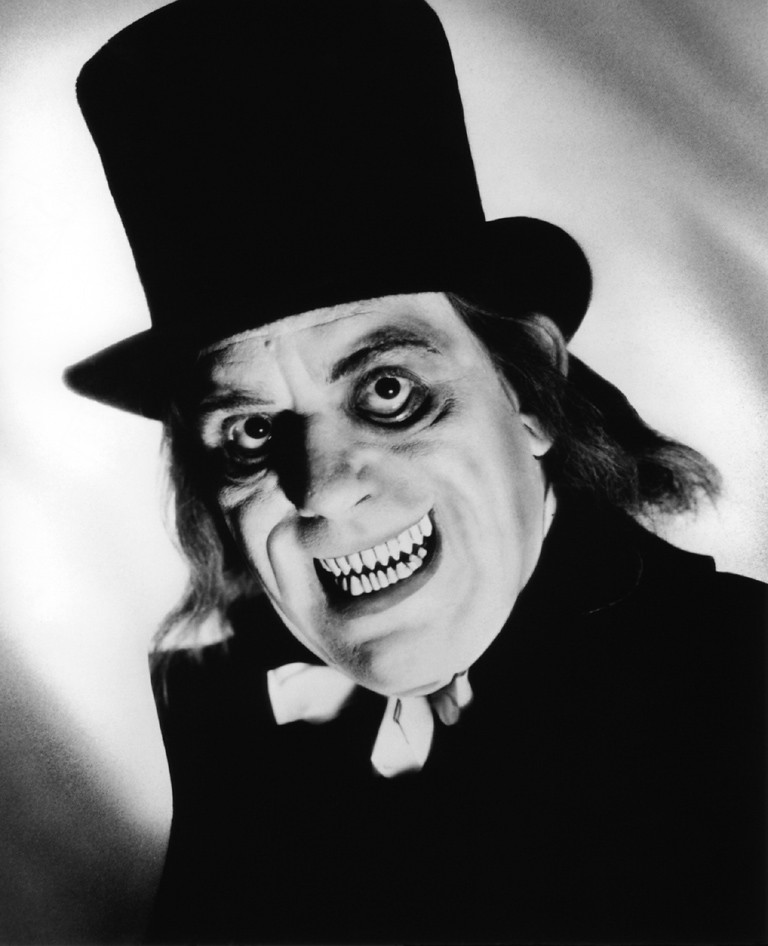
In a world where we casually believe nothing on film ever truly disappears, here is the counterexample that haunts archivists: London After Midnight, the 1927 Tod Browning and Lon Chaney horror picture, was burned out of existence in a single vault fire, and not one frame of it is known to survive. It is the most hunted lost film in Hollywood, and the search has gone on for sixty years with nothing to show but photographs and paper.
Start with how real and how popular it was. This was not an obscure misfire. Costing about 152,000 dollars and grossing roughly a million, it was a hit, and it gave Chaney one of his signature creations: the Man in the Beaver Hat, top hat, mad shark-toothed grin, sunken eyes, a face the actor reportedly built with painful wire fittings to pull his features into a rictus. That image is everywhere in vampire iconography still. The cruel joke is that the still image of the monster outlived the moving image of the movie entirely.
The mechanism of loss is nitrate film. Early stock was cellulose nitrate, chemically unstable, flammable to the point of being able to burn underwater once ignited, and prone to slow self-decomposition over the decades. Studios stored reels of the stuff in concrete vaults precisely because it was a fire hazard. On August 11, 1965, that hazard came due: an explosion and fire tore through Vault 7 on MGM's Lot 1 in Culver City, the roof collapsed, and the nitrate inside was destroyed. Studio inventory records place the last known print of London After Midnight in that vault. The last historians known to have screened the film, among them William K. Everson, had done so in the early 1950s; after the fire, there was nothing to screen.
Now the part that turns a sad story into a true lost-media mystery: we have a near-complete map of the thing that no longer exists. The Library of Congress preserves a 'cutting continuity' for London After Midnight, a shot-by-shot record produced by watching an actual print, logging the footage length of every shot, the tinting, and whether each was a close-up, medium, or long shot. The full 1927 continuity script survives as well. We possess the precise dimensions of every brick in a cathedral that has been reduced to ash, the running order, the cuts, the camera distances, everything except the light itself.
That archive is what made the famous reconstruction possible. In 2002, Turner Classic Movies hired Rick Schmidlin to build a roughly 45-minute version out of surviving production stills, layering in gentle camera moves and intertitles so a modern viewer can follow the entire plot. It is rightly praised and it is quietly devastating, because it underlines exactly what is missing. You are watching a meticulous photographic reconstruction, a kind of cinematic taxidermy, and at no point are you watching the film. It is the outline of a body, not the body.
The honest, skeptical framing is that there is no curse and no cover-up, just the ordinary brutality of how the industry treated its own history. For decades studios regarded silent prints as dead weight and even destroyed films to recover the silver from the emulsion. Film archivists estimate that the large majority of American silent features are simply gone. London After Midnight is not special in its fate, only in its fame. It became the emblem of the loss because it was a celebrated Chaney vehicle, not because anything unusual happened to it.
And yet the inversion refuses to fully close, because 'no known print' is a statement about what we have found, not about what exists. Prints of films shipped worldwide, ended up in foreign archives, in collectors' basements, in mislabeled cans, and lost silents do periodically resurface from improbable places. The standing reward and the steady stream of false alarms testify to how badly people want it back. So the unresolved question is the one every hunter of lost media lives with: is London After Midnight genuinely, permanently gone, or is the last reel sitting in a forgotten can somewhere, waiting, while we make do with a slideshow of its ghost?
Evidence & links (3)
- archive.orgInternet Archive — London After Midnight (1927), TCM photo reconstruction
- en.wikipedia.orgLondon After Midnight (film) — 1965 MGM vault fire and last-known print (reference summary)
- blog.library.villanova.eduFalvey Library, Villanova University — recently digitized materials on the lost film
See what people are saying about this story on X.