
Thousands Mourned a Funeral That Never Happened: The False Memory That Got Its Own Name
Nelson Mandela walked out of Victor Verster Prison in February 1990, served as president of South Africa, won a Nobel Peace Prize, and died a free and famous man in December 2013. This is documented to an almost absurd degree — film, broadcasts, state records, a global presidency. And yet a striking number of people will tell you, with quiet certainty, that they remember him dying in prison in the 1980s. They remember the news reports. They remember his widow's speech. Some remember riots. None of it happened. The phenomenon got its name from that specific shared false memory, and it is named after a man who outlived his own imagined funeral by decades.
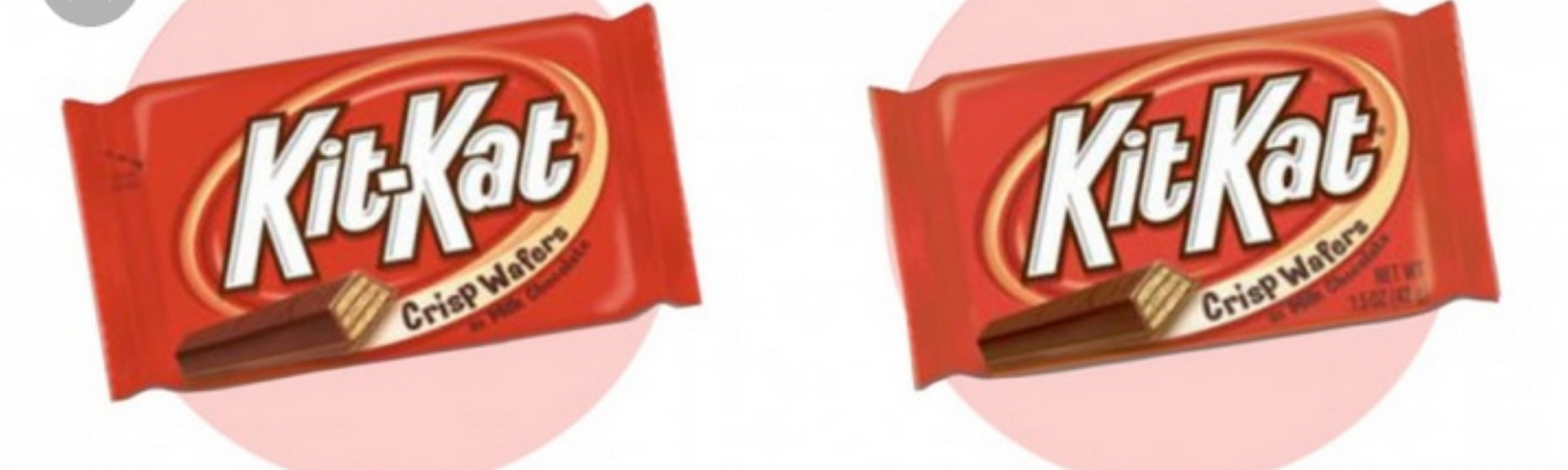
The term was coined around 2009 by the self-described paranormal researcher Fiona Broome, who found, to her surprise, that she was not alone — that strangers at a conference described the same nonexistent 1980s prison death in the same detail. From there the concept metastasized into something far larger and easier to test: a catalogue of collective misremembering. The Berenstain Bears, which a huge share of people are certain was spelled 'Berenstein.' The Monopoly mascot, whom millions 'remember' wearing a monocle he never wore. 'Luke, I am your father,' a line that is actually 'No, I am your father.' Curious George's nonexistent tail. The fruit-of-the-Loom cornucopia that, by every available record, was never on the logo.
What makes these compelling rather than trivial is the convergence. It is not that people misremember randomly; it is that vast numbers misremember in exactly the same wrong direction. That regularity is the actual evidence on the table, and any serious explanation has to account for it. The mystical camp reaches for the dramatic answer: that history itself was altered — by parallel timelines bleeding together, by a botched edit in a simulation, by the world after the Large Hadron Collider being subtly 'not the same world' as before. In this telling our memories are not broken; they are accurate records of a reality that was overwritten, and the documents are the forgery.
The science, unglamorously, explains the convergence very well. Human memory is not a recording; it is a reconstruction, rebuilt slightly differently every time it is recalled, and notoriously vulnerable to suggestion. The psychologist Elizabeth Loftus spent a career demonstrating, in controlled experiments, that confident, detailed, emotional false memories can be implanted in ordinary people — entire fabricated childhood events recalled with total sincerity. Crucially, false memories cluster because human brains share the same machinery and the same priors. 'Berenstein' beats 'Berenstain' because '-stein' is a far more common name ending in the English-speaking world; the brain auto-corrects toward the probable. A wealthy cartoon tycoon 'should' have a monocle, so memory issues him one. We err together because we are built alike and exposed to the same culture — and once a 'corrected' version is shared online, it reinforces itself.
The Mandela case specifically has a mundane scaffolding. Mandela was imprisoned for 27 years and was, for much of the world, a name attached to a cause and a cell — a man easy to confuse with the many anti-apartheid activists who did die in custody, most infamously Steve Biko in 1977. Add genuinely tragic news footage from 1980s South Africa, decades of distance, and the well-documented way memory grafts emotion onto half-remembered facts, and a false prison death becomes not a glitch in reality but an almost predictable error. The 'simulation' theory, by contrast, has never produced a single physical artifact — no altered document, no recovered 'old' version of a logo. It explains everything and predicts nothing, which is the signature of a story rather than a science.
And still, something sits unresolved at the edge of it. The standard explanation accounts for why memory is unreliable, but it has a harder time with the eerie specificity and uniformity of certain shared memories — the way independent people, who never coordinated, produce identical false details. Most of that can be chalked up to shared cognition and viral reinforcement. The honest residue is smaller but real: human collective memory is demonstrably, measurably unreliable in ways we are only beginning to map, and we trust it constantly — in courtrooms, in history, in our own sense of what is true.
Which leaves the genuinely disturbing question, and it requires no parallel universes to be disturbing. If thousands of people can independently, sincerely, and identically remember a globally televised event that never occurred — a death, a funeral, a decade of mourning — then the boundary between what happened and what we are collectively certain happened is far thinner than we like to believe. The Mandela Effect's real revelation is not that the universe was edited. It is that human memory, the one record-keeper we never think to doubt, fabricates with total confidence, and does it in crowds.
Evidence & links (3)
- webfiles.uci.eduLoftus & Pickrell, 'The Formation of False Memories' (Psychiatric Annals, 1995)
- nelsonmandela.orgNelson Mandela Foundation — official biography and timeline (release 1990, death 2013)
- journals.sagepub.comPrasad & Bainbridge, 'The Visual Mandela Effect as Evidence for Shared and Specific False Memories' (Psychological Science, 2022)
See what people are saying about this story on X.